






































Mumbai-based quick service startup Snabbit has raised USD 19 million (~INR 162 crore) in its Series B round to disrupt India’s largely unorganized home services sector. The round was led by Lightspeed Venture Partners with existing investors Elevation Capital and Nexus Venture Partners participating.
The new funding comes just 4 months after Snabbit’s USD 5.5 million (~INR 47 crore) Series A round and the total funds raised in 2025 so far is USD 24.5 million (~INR 209 crore). According to company founder and CEO Aayush Agarwal the quick follow up fundraise is a testament to investor confidence in the business model, scalability and the huge opportunity in India’s on-demand household services space.
“While ride-hailing transformed mobility and e-commerce reshaped fashion, home services have remained stubbornly offline. At Snabbit, we are solving for trust, quality, and speed—at the tap of a button,” said Agarwal in a statement. “The need is universal, the category is massive, and we’re just getting started.”
From Zepto to Snabbit: Building the “OS” of Home Services
Founded in March 2024 by Agarwal, a former Chief of Staff at quick commerce giant Zepto, Snabbit was born out of a personal frustration in finding reliable domestic help in urban India. The company launched in Powai, Mumbai, and currently operates across 10 micro-markets in Mumbai and Bengaluru. With the new funds, Snabbit aims to expand into over 200 micro-markets across India within the next nine months, targeting metro cities and dense residential zones.
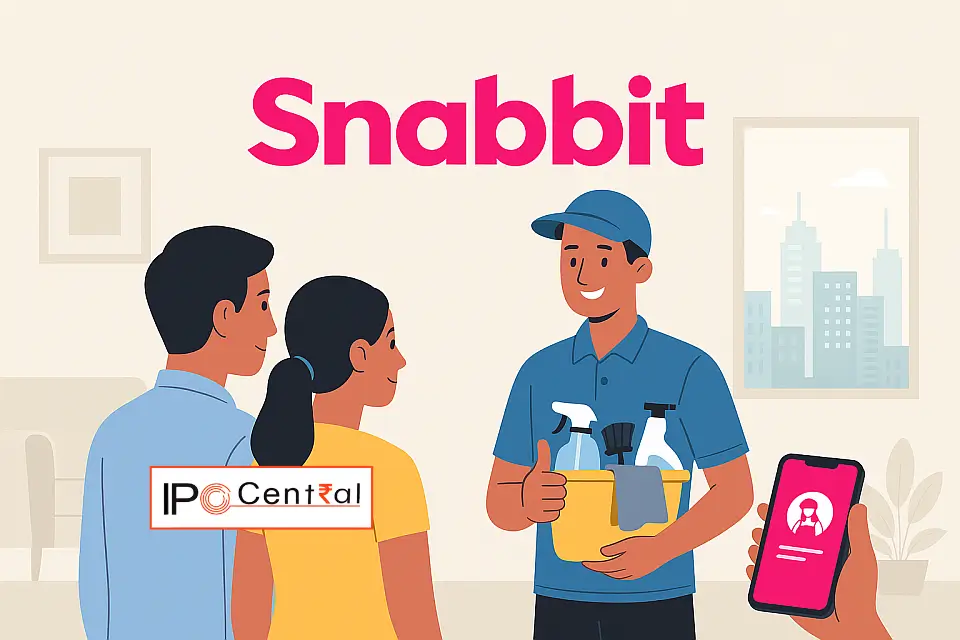
Snabbit operates a hyperlocal, tech-enabled platform that connects users with verified, trained service professionals—dubbed “Experts”—within 10 to 15 minutes for services such as cleaning, dishwashing, laundry, and kitchen help. These experts are available via hourly booking, and the platform’s pricing ranges between INR 169 and INR 499 for up to four hours of service.
“We’ve taken a complex, hyperlocal problem and built a scalable, full-stack solution that benefits both customers and workers,” said Suvir Sujan, Managing Director at Nexus Venture Partners.
Worker-Centric Model with a Tech Backbone
Snabbit’s model is deeply rooted in improving livelihoods. The startup provides workers with Aadhaar-linked bank accounts, health and life insurance, and steady monthly incomes—a stark contrast to the traditionally unstable and unregulated domestic work sector in India.
Many of Snabbit’s workers, especially women, are now able to earn upward of INR 40,000 per month for full-day shifts, while part-time workers make around INR 10,000 per month, supplemented by bonuses. The company has onboarded over 600 professionals to date, with workforce numbers doubling month-over-month, and serves more than 25,000 active customers.
“For customers, Snabbit is about quality and convenience. For our Experts, it’s about dignity, stability, and upward mobility,” Agarwal noted.
Competitive Landscape Heats Up
Snabbit’s latest round places it among a growing cohort of startups capitalising on the quick commerce boom in India. The 10-minute service model—pioneered in groceries, food, and fashion—is now extending into domestic help and household services.
Major incumbent Urban Company, which recently launched its own quick-service vertical ‘Insta Help’, remains the largest player. However, new entrants like Pronto (backed by Bain Capital Ventures) and Broomees are also eyeing the fast-expanding space.
“Snabbit is transforming home services in India by bringing speed, structure, and trust to a sector that has largely operated informally,” said Rahul Taneja, Partner at Lightspeed. “They’re building an entirely new consumer category.”
Tech-Led Scalability and Growing Demand
Snabbit’s internal systems include custom-built CRM tools, a sourcing and screening pipeline, and eKYC integration for worker compliance. The startup has also partnered with mobility provider Yulu to equip women workers with e-bikes, helping them cover larger service areas with a median service radius of 800 metres.
According to Agarwal, Snabbit’s customer acquisition cost is around INR 700, with users transacting three times per month on average. Despite higher pricing compared to competitors, the company is growing 20 percent week-over-week, supported by strong retention rates that rival major consumer internet platforms like Swiggy and Zepto.
“Our model isn’t just about convenience; it’s about consistency and reliability, delivered by a professional workforce empowered by technology,” said Agarwal. As India’s home services sector undergoes long-overdue formalisation, Snabbit appears poised to lead the charge—with fresh capital, expanding operations, and a mission that intertwines business growth with social impact.
For more details related to IPO GMP, SEBI IPO Approval, and Live Subscription stay tuned to IPO Central.