


































From cautious beginnings to a 119% surge, Ather’s story is redefining what “premium” means in India’s electric revolution.
When Ather Energy listed in April 2025, the street yawned. An INR 321 price for a loss-making electric scooter maker was not the kind of debut that usually makes Dalal Street swoon. Yet, six months later, the Bengaluru-based Ather Energy share price is at INR 692 — up 119% — commanding a market capitalisation of INR 26,300 crore, and rewriting how investors value “premium” in India’s electric two-wheeler (E2W) space.
What changed? Execution, ecosystem, and emotion — in that order.
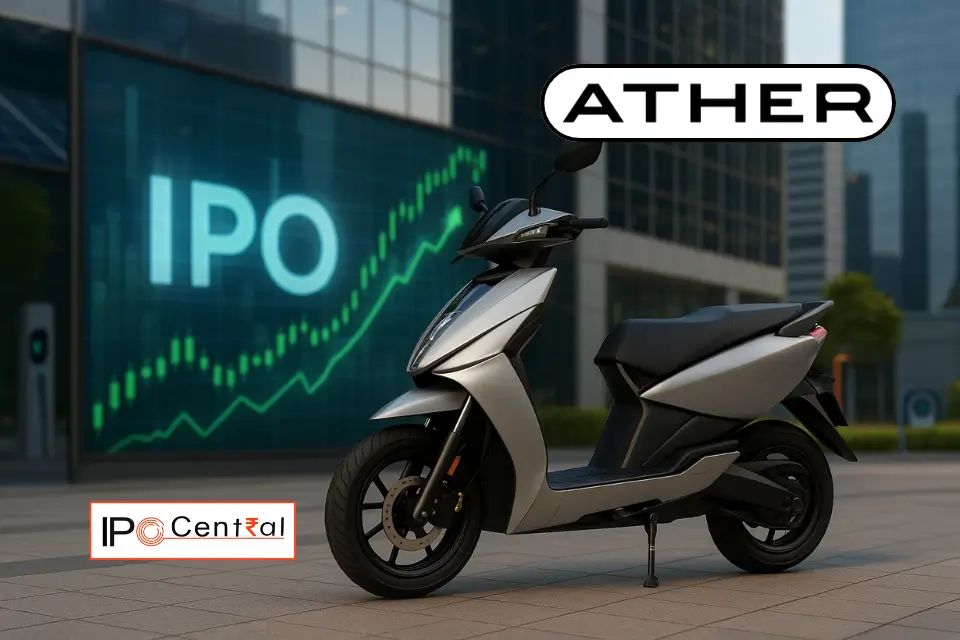
From IPO Scepticism to Investor Conviction
The IPO in April 2025 was supposed to be cautious. Analysts tagged Ather as “premium, loss-making, niche.” Its FY24 losses of INR 1,060 crore against revenues of INR 1,754 crore and a negative EBITDA margin of 39% gave little comfort. But by Q1 FY26, the narrative had flipped.
Losses narrowed sharply, margins improved to –16%, and adjusted gross margins rose to 23%, a 1,700-bps jump year-on-year. The company’s R&D muscle — INR 89 crore invested in Q1 FY26 alone, with nearly half its workforce in engineering — began to show in cost efficiency and faster model cycles.
As one analyst put it, “Ather didn’t promise hypergrowth. It promised precision.”
In a market where peers were chasing volume and headlines, Ather quietly built an ecosystem: 4,032 fast-charging stations, a 700-bps YoY gross-margin expansion, and a user base where 89% subscribed to AtherStack Pro, its connected software platform.
The Rizta Effect — From Cool to Comfortable
If the 450 Series made Ather cool, the Rizta made it relatable.
Launched into India’s mass-family segment, the Rizta wasn’t just another e-scooter — it was an urban-family reimagination of comfort meeting software. Alexa integration, traction control, and a cavernous 56-litre storage transformed perception: Ather was no longer a tech-toy for the elite but a functional, premium EV for everyday India.
That bet changed everything.
By Q1 FY26, Ather’s national market share had risen to 14.3%, up from 7.6% a year earlier. In South India — its traditional stronghold — Ather emerged as the #1 EV brand with 22.8% share. In “Middle India” (Gujarat, Maharashtra, Madhya Pradesh, Chhattisgarh, Odisha), market share more than doubled from 4.1% to 10.7%.
Retail expansion followed the growth — from 208 stores in FY24 to 446 by Q1 FY26, with plans to hit 700 by year-end. What made it smarter was the use of flexible formats: large flagship showrooms in metros, compact 500-sq-ft touchpoints in Tier-2 cities, all with built-in service capability.
It wasn’t scale for scale’s sake — it was capital efficiency with consumer intimacy.
The Numbers Beneath the Narrative
By October 2025, the numbers finally caught up with the story.
According to VAHAN data, Ather sold a record 26,713 scooters, its highest-ever monthly total, capturing a 19.6% market share and holding the #3 position nationally, ahead of Ola Electric (11.6%). Bajaj Auto led the charts with 29,567 units (21.9%), followed by TVS Motor with 28,008 units (20.7%).
What makes Ather’s run-up remarkable is that it has achieved this scale while staying in the premium EV bracket — with average realisations per unit around INR 1.2 lakh, among the highest in the industry.
Here’s the market snapshot for October 2025:
| Brand | Units Sold | Market Share | Rank |
|---|---|---|---|
| Bajaj Auto | 29,567 | 21.9% | 1 |
| TVS Motor | 28,008 | 20.7% | 2 |
| Ather Energy | 26,713 | 19.6% | 3 |
| Ola Electric | 15,481 | 11.6% | 4 |
| Vida (Hero MotoCorp) | 15,064 | 11.0% | 5 |
From a distant fourth player in early 2024 to a record-breaking festive month in 2025, Ather’s ascent is no accident — it’s arithmetic in motion.
Decoding the Valuation Premium
Now comes the part that the market loves to debate — valuation.
At INR 692, Ather Energy trades at a Price-to-Sales multiple of 11.7×, almost 2× Ola Electric (5.9×) and 3× TVS Motor (3.4×). Its EV/EBITDA of –50× and ROE of –156% may look alarming on paper, but investors aren’t valuing today — they’re discounting 2028.
Here’s how the key metrics stack up:
| Metric | Ather Energy | Ola Electric | TVS Motor | Bajaj Auto |
|---|---|---|---|---|
| Market Cap (INR Cr) | 26,338 | 22,116 | 1,66,694 | 2,48,330 |
| Price (INR) | 692 | 50.1 | 3,509 | 8,892 |
| P/S | 11.7 | 5.98 | 3.41 | 4.76 |
| ROE | (156) | (108) | 28.4 | 22.8 |
| EV/EBITDA | (50.1) | (16.3) | 23.9 | 21.9 |
| NPM (FY25) | (36.0) | (49.9) | 5.24 | 14.3 |
| Debt/Equity | 1.26 | 0.69 | 2.08 | 0.27 |
The disparity is stark — legacy players generate profits; Ather burns cash. Yet Ather’s market cap now sits at ~12% of TVS Motor’s despite a fraction of its sales. Why? Because the market isn’t comparing spreadsheets — it’s comparing trajectories.
Ola’s post-IPO slump (–42%) showed investors that scale without discipline bleeds. Ather’s opposite approach — fewer models, tighter control, vertically integrated design — turned scarcity into trust.
As one fund manager quipped off-record, “Ola is running a marathon like a sprint. Ather’s jogging — but with an Apple Watch.”
From Metal to Code — The Profit Engine of Tomorrow
The biggest driver of Ather Energy’s margin turnaround isn’t just volume — it’s software.
The company’s proprietary AtherStack Pro, a subscription platform powering real-time diagnostics, navigation, and OTA updates, now contributes 6% of total revenue at 50%+ EBITDA margins. This “software layer” gives Ather Energy the Tesla-like edge India’s two-wheeler market never had — recurring revenue and premium pricing power.
In Q1 FY26, adjusted gross margin hit 23%, while EBITDA losses reduced to –16%, an improvement of 1,700 bps YoY. Management expects EBITDA break-even by FY27–FY28, with Factory 3.0 in Chhatrapati Sambhajinagar lifting production capacity to 1.4 million units annually.
Two upcoming platforms promise to expand Ather’s universe:
- EL Platform — a lower-cost architecture for affordable scooters.
- Zenith Platform — Ather Energy’s entry into the 125–300cc electric motorcycle segment, targeting enthusiasts.
These aren’t just new products — they are gateways into new demographics and price points.
The October Inflection and Market Shifts
October 2025 proved to be the company’s inflexion point.
While Bajaj and TVS continue to dominate the broader E2W market on network depth and financing, Ather’s festive-season performance — doubling its sales since April — highlighted a shift in consumer sentiment. It’s no longer just about “electric mobility” — it’s about desirable electric mobility.
Even as Ola slipped to fourth with 15,481 units, Ather expanded its lead, posting a volume gap of over 11,000 units. Hero’s Vida followed closely, and startups like Ampere and River continued to build niche footholds.
The bigger story: India’s E2W market crossed the one-lakh-units-per-month threshold, cementing EVs as a mainstream category rather than a subsidy-driven experiment.
The Risks Behind the Rally
Every great rally carries its shadows.
- Policy tapering: Government EV subsidies under FAME and PM E-Drive are expected to decline after FY26, potentially squeezing affordability and slowing adoption.
- Regional dependency: Ather Energy still gets 61% of sales from South India, leaving exposure to localized demand shocks.
- Intense competition: TVS and Bajaj have deep pockets, extensive dealer networks, and the ability to cross-subsidize EV operations through ICE profits.
Yet Ather’s capital discipline stands out. With a current ratio near 0.95 and working-capital days down to 54, the company is learning to grow without burning.
Why the Street Is Still Paying Up
So, what justifies a P/S of 11.7× for a company that’s still loss-making? Three words: execution, ecosystem, endurance.
- Execution: A 97% YoY volume growth in Q1 FY26, despite subsidy rationalization.
- Ecosystem: India’s largest fast-charging network and 89% software adoption rate.
- Endurance: Continuous improvement in margins and product line discipline.
HDFC Securities’ initiation note summed it up succinctly:
“Ather’s operating leverage, localization, and software ecosystem will drive meaningful margin improvement from FY27 onward.”
Investors, it seems, are agreeing.
Act IX: Ather vs. the Titans
When compared to the legacy heavyweights, Ather’s scale looks modest — yet its velocity is unmatched.
- TVS Motor, with an INR 1.66 lakh crore market cap, trades at 3.4× sales and 64× earnings, posting a healthy 5.2% NPM.
- Bajaj Auto, the INR 2.48 lakh crore giant, commands a 14.3% margin and ROE of 22.8%.
- Ola Electric, despite its larger volume share (19.6% in Q1 FY26), struggles with declining sales and a –50% NPM.
And in the middle stands Ather — small, loss-making, but trusted.
Its vertically integrated structure — from in-house battery pack design to the AtherGrid charging network — mirrors an Apple-style ecosystem that Indian investors rarely see in auto manufacturing.

The Long Game
Ather’s founder vision was never about being the largest EV company — it was about building the most respected one. Today, that philosophy seems to be paying off — not yet in profits, but in predictability.
The company’s focus on R&D-led innovation, software margins, and capital-efficient growth has created something India’s auto market has rarely rewarded — a “premium EV compounder in the making.”
For more details related to IPO GMP, SEBI IPO Approval, and Live Subscription stay tuned to IPO Central.