



































Ghanshyam Das Birla was born on 10 April 1894 in Pilani, Rajasthan, into a conservative Marwari business family. His father, Raja Baldeo Das Birla, had already laid the foundation for a prosperous trading house that dealt in cotton, grains, and silver. From an early age, young Ghanshyam Das exhibited a rare combination of business acumen and national consciousness — traits that would define his life and shape Indian capitalism in the 20th century.
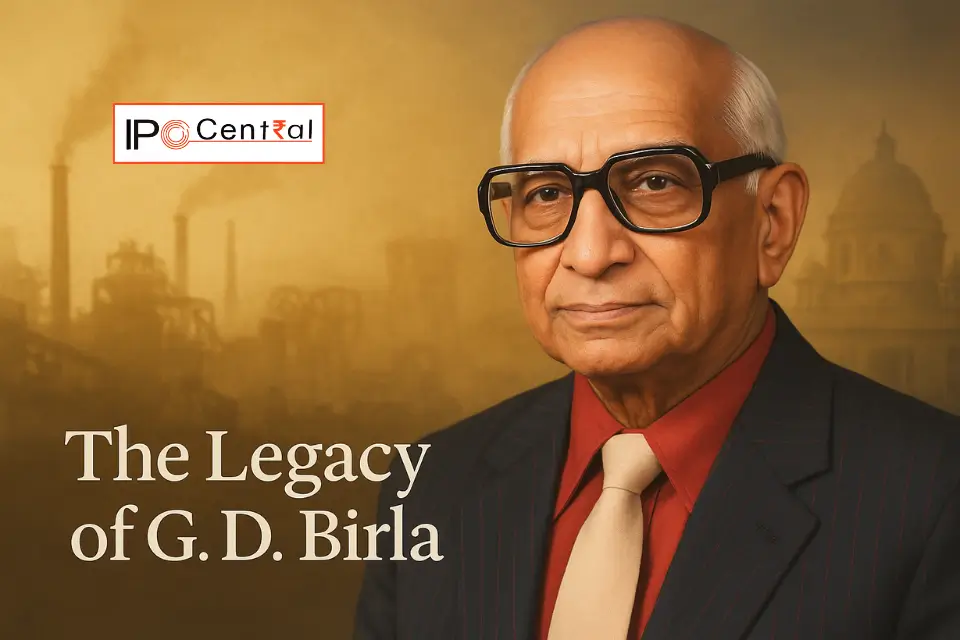
Ghanshaym Das Birla Education & Early Influences
Growing up in the arid yet industrious Marwari heartland, Ghanshyam Das Birla was influenced by the ethos of thrift, enterprise, and discipline. He received limited formal education but absorbed practical lessons from the family’s trading operations. At just 15, he began helping in the family business, often traveling to Bombay and Calcutta, India’s then-financial hubs. It was during these formative years that he became inspired by Swadeshi ideals, advocating for Indian-made goods and economic self-reliance — themes that resonated deeply with Mahatma Gandhi’s philosophy.
The Birla Family’s Rise in Indian Commerce
The Birla family represented a new class of Indian entrepreneurs who sought independence not just politically but economically. Unlike colonial trading houses dominated by British interests, Birla envisioned Indian ownership of key industries. The family’s evolution from traders to industrialists paralleled India’s transition from colonial dependency to national assertion.
Ghanshyam Das Birla’s Early Ventures: Laying the Foundations
In 1918, Ghanshyam Das Birla established the Birla Jute Mills in Calcutta, signaling his entry into manufacturing. This move was revolutionary — it was among the first Indian-owned industrial enterprises in a sector previously monopolized by British firms. Despite facing discrimination and resistance from colonial authorities, Birla persisted, supported by a growing network of nationalist leaders who saw his ventures as a pillar of the Swadeshi movement.
Founding Vision and Industrial Empire
The 1920s and 1930s marked a defining phase for Ghanshyam Das Birla organizations founded across India. He expanded into diverse industries — textiles, cement, chemicals, and automobiles — often venturing where few Indians dared. Notable among these were Hindustan Motors, Grasim Industries, Orient Paper, and the Birla Industrial & Technological Museum.
Operating under British rule, Indian industrialists faced systemic barriers — from credit restrictions to trade discrimination. Yet, Birla’s persistence was unmatched. His collaboration with other nationalists like Lala Shri Ram and Jamnalal Bajaj created a network of indigenous capital that fueled India’s industrialization. Ghanshyam Das Birla also founded UCO Bank (United Commercial Bank) in 1943, one of India’s first truly Indian-controlled financial institutions.
Read Also: Full List of CK Birla Group Companies and What They Actually Do
GD Birla Relationship with Mahatma Gandhi
Birla’s most profound relationship was with Mahatma Gandhi. The Birla House in Delhi, now Gandhi Smriti, became a site of historic significance — it was here that Gandhi spent his final days before his assassination in 1948. Birla was not merely Gandhi’s host but also his financier and confidant. Their correspondence, preserved in the Collected Works of Mahatma Gandhi, reflects a deep synergy between business ethics and spiritual economics.
Nation-Building During the Freedom Struggle
As India’s freedom movement intensified, Birla used his industrial success to advance national causes. He funded the Harijan Sevak Sangh, supported Khadi institutions, and underwrote educational and social initiatives across India. His belief in “trusteeship capitalism,” where wealth served the people, aligned closely with Gandhi’s moral economics.
By the 1940s, the Birla Group had become a cornerstone of Indian industry. Its holdings spanned jute, cement, sugar, and automobiles. The Birla Industrial Empire symbolized a self-reliant India — capable of producing its own goods, financing its own ventures, and defining its own economic destiny.
Ghanshyam Das Birla Educational Vision
Beyond commerce, Ghanshyam Das Birla education initiatives transformed India’s intellectual landscape. He believed that industrial growth without education was hollow. In 1929, he founded the Birla Education Trust in Pilani, which evolved into the Birla Institute of Technology and Science (BITS), Pilani, one of India’s premier engineering universities.
BITS Pilani was more than an educational institution — it was an experiment in nation-building. Modeled after MIT and Stanford, it emphasized applied science, innovation, and entrepreneurship. It produced engineers who would later drive India’s technological revolution, from manufacturing to information technology.
The Birla family continued his vision, establishing Birla Vidya Mandirs, Birla Balika Vidyapeeth, and several engineering and management colleges across India. These schools provided quality education to both men and women, often in rural or underserved areas.
GD Birla believed education should blend moral values with scientific temper. His writings emphasized discipline, duty, and devotion to national service. “Knowledge,” he once said, “is not an ornament to wear, but a tool to build.” This ethos continues to guide the Birla educational institutions today.
Read Also: List of the Oldest Business Families in India
Linking Industry with Academia
Long before the term “industry-academia collaboration” became fashionable, Birla had pioneered it. He ensured that graduates from his institutions could transition seamlessly into the factories and offices of the Birla Group — a model that inspired later Indian conglomerates like Tata, Mahindra, and Infosys.
Post-Independence Industrial Policy
After India’s independence in 1947, Ghanshyam Das Birla history became intertwined with the country’s industrial evolution. He served as a member of the Indian Planning Commission (Advisory Council) and influenced key economic policies. Though sometimes at odds with Jawaharlal Nehru’s socialist vision, Birla advocated for a mixed economy, where private enterprise complemented state planning.
The Birla Family and Its Continuity
The Birla family evolved into one of India’s most respected business dynasties. Each generation built upon GD Birla’s foundations while adapting to changing economic climates. The family’s ventures diversified into telecommunications, finance, and global manufacturing through leaders like Aditya Vikram Birla and Kumar Mangalam Birla.
Ghanshyam Das Birla Grandchildren & Heirs
The Ghanshyam Das Birla grandchildren inherited not just wealth but a deep sense of responsibility. Figures like Basant Kumar Birla and Krishna Kumar Birla carried forward his industrial and philanthropic missions. These Birla heirs maintained the family’s leadership in sectors ranging from education to energy, ensuring that GD Birla’s principles—integrity, service, and innovation—remained intact.
Birla Temples and Cultural Patronage
Birla’s philanthropy wasn’t limited to factories and schools. He built the iconic Birla Mandirs in Delhi, Jaipur, and Hyderabad — magnificent temples blending spirituality with architecture. These structures remain living testimonies to his devotion to Indian art and culture.
Unlike many industrialists of his time, Birla maintained a clean record of corporate ethics. He promoted fair labor practices and reinvested profits into social causes. His adherence to Gandhian ethics in business created a template for responsible capitalism in India.
Ghanshyam Das Birla’s Relevance in Modern India
In the age of unicorns and startups, Ghanshyam Das Birla legacy remains profoundly relevant. His belief that business must serve society anticipates today’s ESG (Environmental, Social, and Governance) frameworks. Entrepreneurs like Narayana Murthy and Ratan Tata often echo Birla’s philosophy — that profit and purpose can coexist.
Birla’s Swadeshi-led industrialization mirrors the Make in India campaign. His call for domestic production and value addition was not mere rhetoric but practical economics. Today’s push for manufacturing resilience in semiconductors, defense, and renewable energy draws from his foundational ethos of self-reliance.
The Birla philanthropic model — blending education, culture, and social infrastructure — predates the CSR laws by decades. According to Forbes India, the Birla trusts contribute significantly to education, health, and cultural preservation, embodying what economists term “inclusive capitalism.”
Modern economists view Birla as a bridge between colonial and postcolonial economies. His early industrial ventures demonstrated that Indian capital could compete with Western enterprise, provided there was policy support and patriotic intent.

Conclusion
Ghanshyam Das Birla was more than an industrialist; he was a nation-builder, a philosopher of enterprise, and a patron of education. His factories produced goods, but his institutions produced ideas — ideas that continue to shape India’s economic and moral fabric. From the cotton mills of Calcutta to the lecture halls of BITS Pilani, his influence endures as a testament to what ethical capitalism can achieve.
“Industry without morality is bankruptcy,” Birla once said — a line that resonates even more powerfully in today’s complex global economy.
