

































Big breakthrough in water and health with implications for public health and environmental safety. IIT Guwahati nanosensor can detect deadly pollutants in water in seconds, including mercury and tetracycline antibiotics. This is a new era of low-cost, fast and highly sensitive water testing that will change environmental monitoring and biomedical diagnostics.
A Water Crisis
Rapid urbanisation, uncontrolled industrialisation and increasing pharmaceutical waste have led to water pollution across the globe. Heavy metals like mercury and improperly disposed antibiotics, especially tetracyclines used to treat respiratory diseases, are entering rivers, lakes and groundwater.
The situation is serious. Organic mercury is a carcinogen and causes neurological disorders and cardiovascular diseases. Antibiotic contamination leads to drug resistance, a looming public health crisis. Quick and accurate detection of these pollutants is critical – but traditional methods are slow, expensive and lab-based.
The Science Behind the Sensor
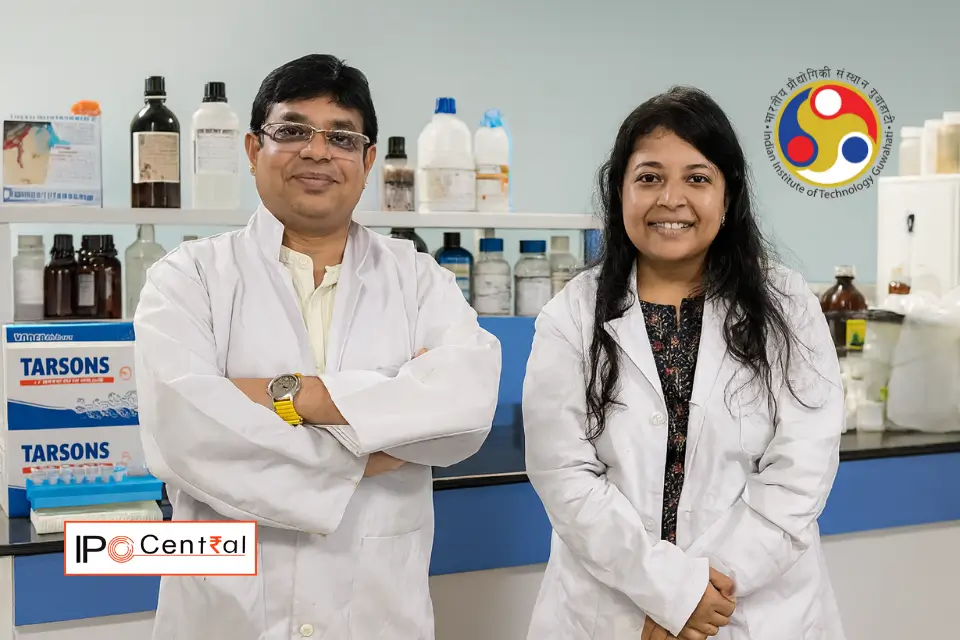
Led by Prof. Lal Mohan Kundu of IIT Guwahati’s Department of Chemistry, with research scholars Ms. Pallabi Paul and Ms. Anushka Chakraborty, the team has developed a nanosensor built on carbon dots synthesised from milk protein and thymine – a biogenic, low-cost cost and eco-friendly precursor.
These carbon dots emit natural fluorescence under ultraviolet light. When exposed to mercury or tetracyclines, their glow dims in less than 10 seconds, giving a visual cue of contamination.
The sensor is very sensitive – it can detect mercury at 5.3 nanomolar (1.7 parts per billion) levels, below the US Environmental Protection Agency’s safety limits and tetracycline antibiotics at 10–13 nanomolar levels.
IIT Guwahati Nanosensor: From Lab to Real World Testing
Beyond the lab, the research team has tested the sensor in multiple environments: tap water, river water, milk, urine and serum samples. To make it accessible, the sensor has been integrated into simple paper strips. With just an ultraviolet lamp, users can do instant on-the-spot water testing – a game changer for households and health professionals.
Prof. Kundu added: “Pollutants like mercury and antibiotics need to be detected not only in water but also in biological fluids. This sensor, due to its nanoscale and fluorescence properties, can be a highly sensitive and biocompatible platform that can be extended to biomedical diagnostics.”
Published in the Global Journal
The findings have been peer-reviewed and published in the prestigious international journal Microchimica Acta, affirming the innovation’s scientific credibility and potential for global adoption.
Why It Matters: Broader Impact
IIT Guwahati nanosensor is more than just a scientific achievement – it’s a public health shield.
- For India: With rivers like the Ganga and the Yamuna being polluted, this technology can enable rapid grassroots monitoring and reduce health risks in rural and urban areas.
- For the World: Low-cost, scalable and biocompatible, this sensor can be deployed in developing countries where clean water is a challenge.
- For Industry & Healthcare: Beyond water, it can test biological samples and has applications in clinical diagnostics, pharmaceutical monitoring and food safety.

Market and Innovation Outlook
From an industry perspective, IIT Guwahati’s nanosensor puts India at the forefront of the global water testing and biosensor market, which is expected to grow exponentially with the increasing demand for fast, affordable and portable detection tools.
This can lead to commercial spin-offs, collaborations with biotech companies and start-ups focused on water quality.
For more details related to IPO GMP, SEBI IPO Approval, and Live Subscription stay tuned to IPO Central.