





























The scent of freshly dyed fabric once filled the narrow streets of Mumbai’s old textile lanes. Amid the bustle of merchants shouting rates and workers carting bolts of cloth, a young trader named Kantilal Shah quietly built a business on two simple words — honesty and quality.
Forty years later, that modest enterprise has evolved into KK Silk Mills, a vertically integrated textile manufacturer with annual revenues of over INR 220 crore and is now gearing up for its BSE SME IPO. In an exclusive interview with IPO Central, Managing Director Manish Shah shared how the company blends its family legacy with modern innovation to craft a new chapter in India’s textile story.

The First Thread: Honesty and Humility
In the 1980s, amid the rhythmic chatter of textile traders in Mumbai’s mill district, a young entrepreneur named Kantilal Shah began a modest fabric-trading venture. His capital was not in machines or money but in two unshakable assets — honesty and quality.
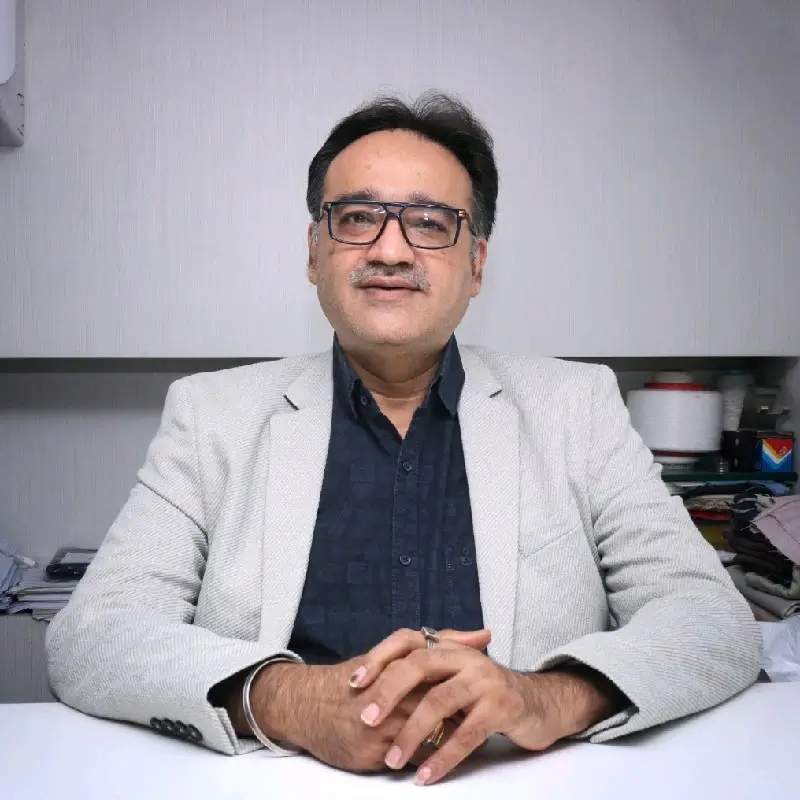
“My father’s vision was simple: provide good-quality fabric with sincerity and build relationships that last,” recalls Manish Shah, Managing Director of KK Silk Mills.
For Kantilal Shah, running a business meant running it right. “He never imagined that this small venture would one day become a full-scale manufacturing company, let alone a publicly listed one,” says Manish Shah who is currently grooming the next generation for a smooth transition. That humility, paradoxically, became the foundation of endurance. Decades later, it remains the moral warp running through every meter of fabric KK Silk Mills produces.
From Traders to Creators: The Defining Pivot
By the late 1980s, the Shah family realized that trading alone could not sustain growth or differentiate them in a crowded market. The real value lay in making.
“The key turning point was when we moved from just trading fabric to making it ourselves,” says Manish Shah. “That decision gave us control over quality and helped us create our own unique products. It changed our identity — we became a company focused on creating, not just selling.”
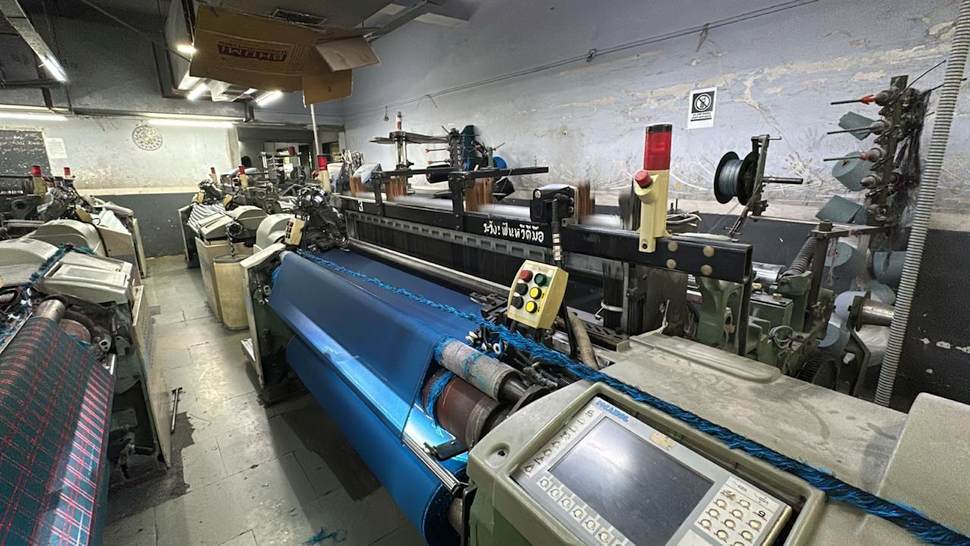
That pivot crystallized in 1991 with the incorporation of KK Silk Mills, marking the transition from merchant to manufacturer. Today the company operates a 5,422 sq. m. vertically integrated facility in Umbergaon, Valsad, handling weaving, dyeing, finishing, and packaging under one roof.
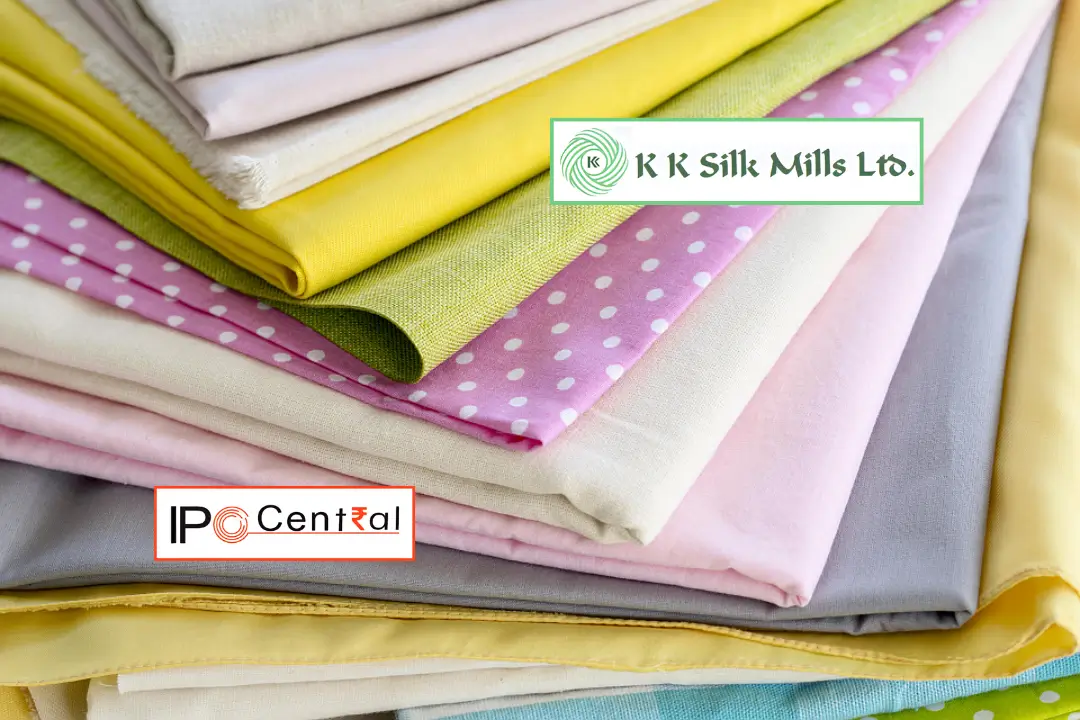
Its portfolio spans suiting and shirting fabrics, uniforms, kidswear, womenswear, and specialty lines like sherwani, burkha, and cushion fabrics. Under its “TexTree” brand, KK Silk supplies to domestic and international garment manufacturers, corporates, and uniform institutions — managing design-to-sales in-house to maintain precision and consistency.
Building Design and Innovation Into the Weave
As KK Silk Mills matured from a production-driven company into a design-conscious brand, its creative focus deepened.
“Innovation today isn’t just about machines — it’s about reading what the customer will want next,” says Manish Shah.
The company has invested in in-house design and sampling facilities that keep pace with changing fashion trends, from contemporary shirting textures to digital prints and sustainable blends. This move signals KK Silk Mills’ readiness to compete in higher-value segments where design and quality carry equal weight.
When the Looms Fell Silent
No growth story is complete without a test of survival. For KK Silk Mills, that test came in 2020.
“The COVID period was one of the toughest phases for us — operations were halted, demand dropped, and there was real uncertainty about survival,” recalls Manish Shah.
The company responded with calm discipline: streamlining costs, focusing on essential fabrics, and improving manufacturing efficiency. When the markets reopened, it bounced back stronger.
Financially, the recovery is visible. Revenue rose from INR 188.8 crore in FY23 to INR 220.8 crore in FY25, while net income quadrupled from INR 1.06 crore to INR 4.68 crore. Margins strengthened; EBITDA improved from 4.4% to 6.3%, and ROCE climbed to 12.4%.
KK Silk Mills Financial Performance
| FY 2023 | FY 2024 | FY 2025 | Q1 FY 2026 | |
| Revenue | 188.81 | 190.54 | 220.78 | 54.33 |
| Expenses | 187.40 | 188.35 | 214.83 | 52.44 |
| Net income | 1.06 | 2.26 | 4.68 | 1.51 |
Figures in INR Crores unless specified otherwise
For investors, that resilience tells a bigger story — the ability to manage shocks without losing focus on fundamentals.
Tradition Meets Technology: Generational Balance
Three generations now shape KK Silk Mills, each adding a distinct layer to the company’s weave. The founder built trust; the second generation institutionalized operations; and the third introduced digital thinking.
“We balance leadership across generations by keeping the core values — trust, quality, and customer commitment — exactly as they were,” says Manish Shah. “But in areas like technology, product development, and market strategy, we encourage new ideas and experiments.”
The younger leaders bring a digital and retail-first mindset, but cultural alignment remains deliberate. “Along with succession planning, we are gradually aligning teams through structured communication and collaborative decision-making. That ensures a smooth cultural transition while preserving what defines KK Silk.”
One conscious change, Manish adds, is a more open, collaborative work culture. What has never changed: an uncompromising commitment to quality and customer trust.
Modernization with a Human Touch
Automation and digitalization are central to KK Silk Mills’ modernization plan, but the company’s approach is refreshingly humane.
“Many Indian SMEs hesitate to adopt automation because it requires high upfront investment and a long-term outlook, which can be challenging in a cost-sensitive market,” explains Manish Shah. “At KK Silk, we addressed this by taking a phased and well-planned approach to technology adoption. This helped us improve efficiency without disrupting our financial stability.”
Beyond capital investment, the company’s modernisation journey has focused on people.
“As we modernize with automation and digital tools, we make sure our long-serving employees grow with us,” adds Manish. “We provide hands-on training, keep transitions gradual, and involve them in every new process. The goal isn’t to replace experience but to empower it.”
In an industry where modernization often sidelines traditional craftsmen, KK Silk’s approach preserves continuity. For the company, experience remains as valuable as machinery — perhaps more so.
The Numbers Tell Their Own Story
Behind the narrative lies consistent financial discipline. Between FY23 and FY25, EPS rose from INR 0.71 to INR 3.13, ROE doubled to 11.8%, and debt-to-equity remained stable around 1.49× — signaling prudent leverage.
According to Manish Shah, the company’s conservative capital philosophy extends to its cost strategy. Instead of speculative hedging, KK Silk Mills manages input volatility through staggered procurement and long-term supplier relationships.
“Raw-material price fluctuations are a reality in our industry,” says Manish. “Our internal cost-absorption mechanisms help maintain stability even at an SME scale.”
Such operational maturity, rare among small-cap manufacturers, underpins the company’s market readiness.
The Industry Landscape
India’s textile sector — valued at over USD 200 billion — contributes nearly 2% to GDP and remains one of the largest employers of skilled and semi-skilled labor. Yet, most of the country’s small and mid-sized textile firms still operate outside capital markets.
The BSE SME platform, where KK Silk Mills is set to list, has become a bridge for such enterprises — enabling access to modernization capital and investor visibility. The company’s IPO thus reflects a broader economic story: of legacy-driven SMEs transforming into structured, professionally governed public entities.
The Road to the Public Markets
KK Silk Mills is now entering its next phase with an INR 28.5 crore IPO on the BSE SME platform, scheduled for 26 to 28 November 2025, at an issue price of INR 36–38 per share. The entire issue is fresh equity — no offer for sale — with proceeds earmarked for modernization and debt repayment.
“After modernization and debt reduction, our next priorities are clear,” says Manish Shah. “We aim to introduce new technology that enhances speed and design capabilities, diversify our product range, and expand into new markets with innovation-led fabrics.”
Retail Ambitions: From Mills to Market
KK Silk Mills is also quietly building its consumer-facing brands — Krizz Mart and TexTree.
“We’ve seen encouraging early traction, especially among customers who value quality and variety,” says Manish Shah. “The response validates our approach of combining trusted fabrics with modern retail experiences.”
If scaled effectively, these brands could reposition KK Silk beyond the B2B textile supplier segment into the B2C lifestyle space — where valuation multiples are significantly higher.
The Competitive Moat
In India’s fiercely price-competitive textile market, KK Silk Mills’ moat is multi-layered.
- Technology: A phased, sustainable automation model that raises efficiency without over-leveraging.
- Relationships: Long-term trust with corporate clients and garment makers.
- Quality: Tight in-house control and a culture of consistency.
- Cost Discipline: Smart procurement and inventory cycles to absorb volatility.
“Our focus on innovation and timely delivery helps us stay ahead of market trends,” says Manish Shah.
Geography and Global Ambitions
Having established a solid base in Gujarat and Maharashtra, KK Silk Mills is eyeing gradual expansion into Panipat, Ludhiana, and Erode, the country’s other textile hubs.
Exports currently account for only 0.47% of revenue — a figure Manish Shah intends to scale substantially in the coming years.
“Exports are currently a small part of our revenue as our focus has been on building a strong domestic foundation first,” he explains. “The main challenge is expanding direct access to the right international buyers. Strengthening our global outreach and partnerships will be the most effective lever to grow exports going forward.”
In a world where supply-chain resilience and compliance are increasingly critical, an integrated Indian manufacturer with reliable quality standards has a meaningful opportunity abroad. KK Silk’s export strategy, Shah says, will revolve around buyer access, brand positioning, and long-term relationships rather than short-term volume gains.
Governance and Culture: The Intangible Edge
Beyond machinery and numbers, KK Silk Mills’ real differentiator lies in governance culture. Each generation has expanded the scope of accountability — from informal family trust to structured management communication.
The company’s emphasis on inclusion and adaptability — training workers, empowering younger leaders, and keeping communication transparent — positions it as a forward-thinking SME ready for public scrutiny.
A New Beginning, Not a Finish Line
“We would like investors to see KK Silk Mills as more than a textile manufacturer,” says Manish Shah, Managing Director of KK Silk Mills. “Our vision is to evolve into an integrated lifestyle and fashion brand, combining our manufacturing strengths with design, retail, and digital capabilities.”
That ambition carries echoes of the founder’s own ethos — steady, sincere, forward-moving. Four decades on, the family’s loom continues to weave the same values into new fabrics, new markets, and now, the public markets.
For India’s growing class of retail investors, KK Silk Mills IPO offers more than a ticker symbol; it offers a story — of resilience, reinvention, and a promise that the best threads never break.
Legacy Beyond the Listing
As the looms hum softly in Umbergaon and the IPO roadshows gather pace, Manish Shah often reflects on the journey that began with his father’s small trading counter in Mumbai.
“Every generation adds its own design to the same fabric,” he says quietly. “Our job is to keep the weave strong, no matter how the patterns change.”
Those words capture the very essence of KK Silk Mills — a company that has grown through three generations without ever breaking the thread that holds its identity together. From the old cloth markets of the 1980s to the digital dashboards of 2025, it remains guided by the same founding principle: trust built one meter of fabric at a time.
As it steps onto the public stage, KK Silk Mills isn’t merely listing shares; it’s extending a legacy — inviting investors to become part of a story still being woven.

Rajat Bhati has a strong technical background and 5 years of experience in the stock market. He focuses on equity research, technical analysis, IPO valuations, and risk management, helping investors make clearer, data-backed decisions. Today, he works full-time to educate people about the opportunities in IPO market.