





























Last Updated on February 11, 2026 by Rajat Bhati
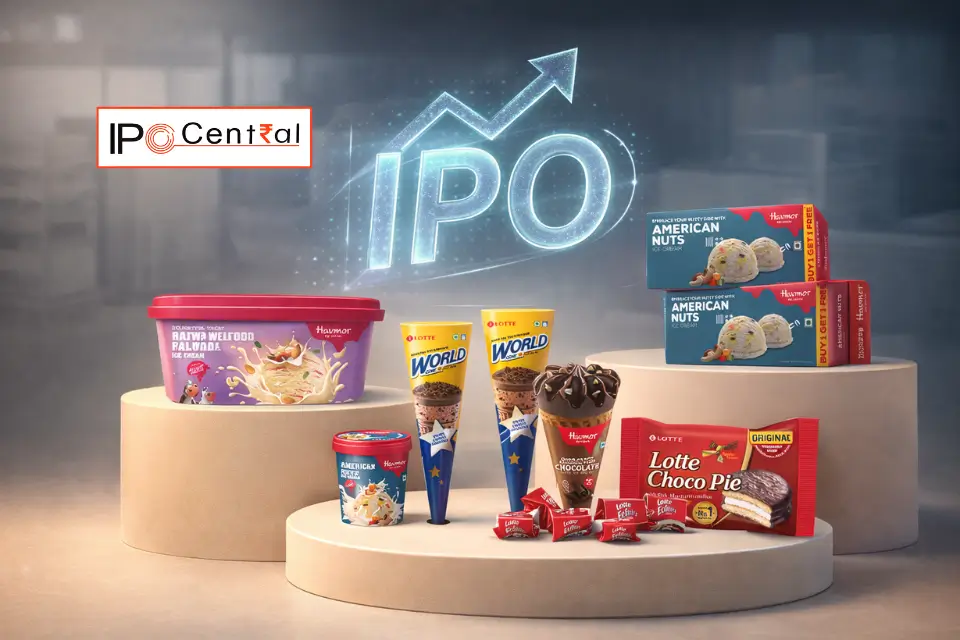
Major South Korean FMCG player Lotte Wellfood is planning an IPO for its Indian business. This shows that multinational companies are becoming more confident in India’s growing capital markets. Lotte India IPO would pertain to the company’s Indian ice cream operations, which currently operate under its recently merged entity, which consists of Havmor Ice Cream and Lotte India.
While there hasn’t been an official statement yet, the strategic consolidation, aggressive capacity expansion, and clear revenue visibility all point to the fact that the groundwork for an IPO is already being laid.
Merger Lays the Foundation for Market Debut
The groundwork for this IPO was laid back in 2024, when Lotte Wellfood executed a high-stakes merger of its two Indian subsidiaries: Lotte India (the confectionery veteran) and Havmor Ice Cream.
By early 2025, the integrated entity had already streamlined its backend operations. Today, in 2026, the “One India” strategy is yielding significant results:
- Capital Efficiency: The merger has allowed the company to reinvest cash flows more aggressively into high-growth segments like premium chocolates and specialized frozen desserts.
- Operational Synergy: While Lotte and Havmor continue to thrive as independent brands for consumers, their unified supply chain and manufacturing backend have significantly improved profit margins.
Strong Revenue Visibility Strengthens IPO Case
Lotte Wellfood has said that the combined India business hopes to make about INR 6,000 crore a year in the medium term after the merger. Within this, the ice cream vertical alone aims to generate revenues of approximately INR 3,000 crore by FY27, a level sufficient to establish its presence in public markets.
For investors, Lotte’s Indian ice cream business is one of the top organized players in the country at this level of scale, thanks to its strong brand equity and nationwide reach.
Lotte India IPO ambition is backed by meaningful investments. The company has announced:
- INR 400 crore investment to set up a new Havmor ice cream manufacturing facility in Pune, Maharashtra
- Earlier guidance of INR 450 crore capex over five years for capacity expansion
- India’s first Korean-technology-based ice cream plant under the Havmor brand
The new facility will significantly expand Lotte’s production capacity and allow deeper penetration into south and central Indian markets. Havmor already operates manufacturing units in Ahmedabad and Faridabad, sells across 20+ states, and runs 200+ exclusive ice cream parlours.
India: A Strategic Growth Engine for Lotte
Lotte Wellfood entered India in 2004 and subsequently bought Parrys Confectionery. In 2017, it acquired Havmor Ice Cream to strengthen its presence more prominent. India has since grown into one of Lotte’s fastest-growing markets beyond South Korea.
Management has said on several occasions that India’s good demographics, rising disposable incomes, and trend toward premiumization are the main reasons for this. At the same time, Lotte is also adapting global brands like Pepero to fit Indian tastes and the weather.
Lotte India IPO: Part of a Larger MNC Wave
The Lotte India IPO is part of a larger trend in which more and more multinational companies are choosing India as their preferred listing location.
India is now a reliable and liquid place for global parents to raise capital after the successful IPOs of big companies like Hyundai Motor India, LG India, and Tenneco Clean Air.
Bonfiglioli Transmissions’ recent IPO filing adds to this momentum. Some reports are also suggesting that other Indian companies owned by MNCs, like Carlsberg India, Hindustan Coca-Cola Beverages, and Flipkart, are also evaluating market conditions to launch their IPOs.
For Lotte Wellfood, the Havmor IPO would offer investors exposure to India’s fast-growing branded dairy and frozen dessert segment—backed by a global parent with deep operational expertise.
Bottomline: Lotte Wellfood is still in the exploratory stage, but its actions—merging, spending a lot of money, and setting high revenue goals—show that an Indian IPO is no longer a matter of if, but when.
Good