
































Not so long ago, Ola Electric was touted as India’s Tesla, and it did ride the IPO wave big time. Listed on 9 August 2024 at INR 76 per share, the stock shot up to an all-time high of INR 146.38 per share, and investors were euphoric. But the party was short-lived. Today, Ola Electric’s stock is trading at around INR 53.85, which is a 63% drop from its peak.
So, what went wrong? And more importantly, what can investors learn from Ola Electric post-IPO performance? Let’s break down Ola Electric’s business model and its failure in detail.
Ola Electric’s Business Model
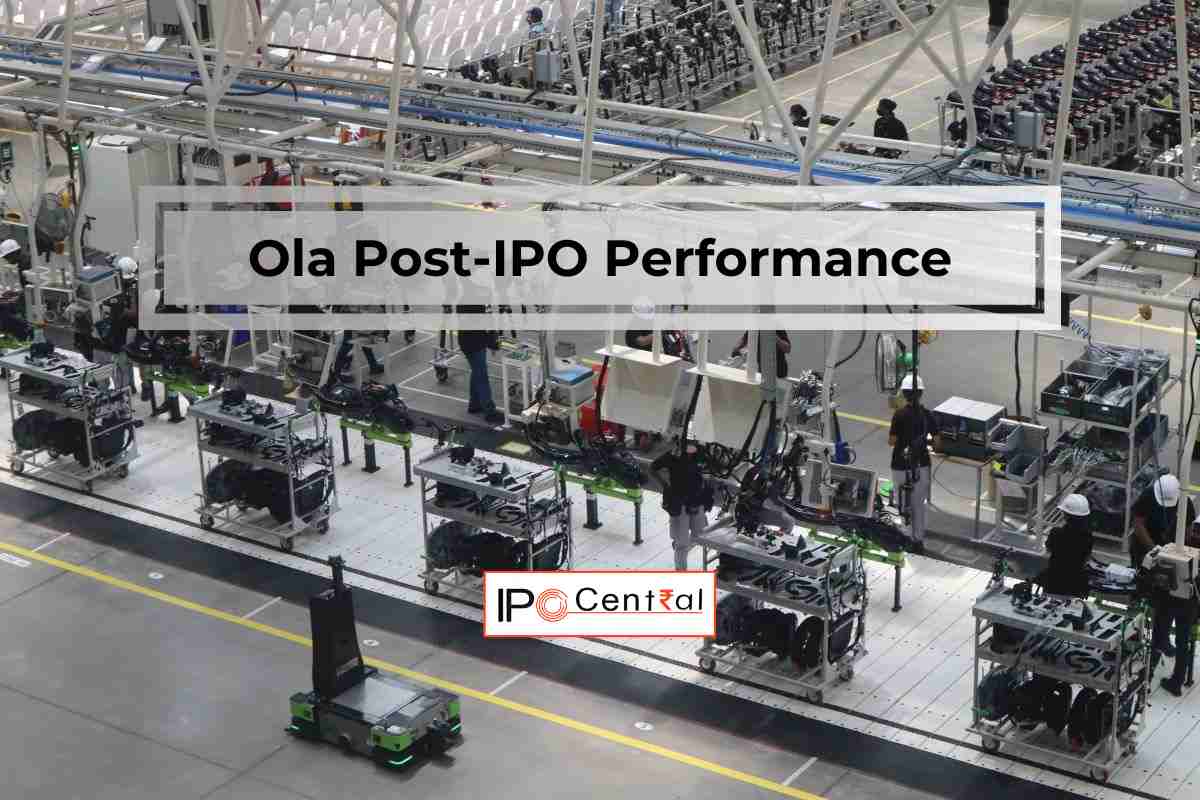
Ola Electric’s business model was based on vertical integration, direct-to-consumer sales and in-house manufacturing. The company wanted to control the entire EV value chain – from research and development (R&D) to final sales and after-market services. Here’s a detailed breakdown:
- Revenue Model – Ola Electric generates revenue from the sale of EV scooters, vehicle accessories (chargers, spare parts), and related services. Most of the revenue has come from Ola S1 Pro, but the company has expanded to mass market models like Ola S1 X. However, the dependence on a limited portfolio of products increased risk exposure.
- Manufacturing & Supply Chain – The Ola Futurefactory was an advanced automated plant with a capacity of 10 lakh units per year. But despite in-house cell manufacturing (Ola Gigafactory), the company still depends on imported lithium-ion cells from foreign suppliers, making it vulnerable to price fluctuations and supply chain disruptions.
- D2C (Direct-to-Consumer) Sales Model – Unlike traditional automakers that have dealerships, Ola Electric has 870 experience centers and 431 service centers to manage sales and after-sales services. While it eliminated middlemen, it added huge operational costs.
- Planned Expansion into Motorcycles & Battery Tech – The company announced new motorcycle models (Diamondhead, Roadster, Adventure, Cruiser) for FY2026 and plans to manufacture energy storage systems. But execution risks are high.
Risks Associated with Ola Electric’s Business Model
Ola’s business model had inherent risks that contributed to its decline:
- Heavy Reliance on a Few Models: Over 60% of revenue came from the Ola S1 Pro, making the company vulnerable to shifts in consumer demand.
- Dependence on Government Subsidies: The FAME II subsidy cut in June 2023 led to a 58.14% drop in orders, proving that the company’s pricing strategy was not viable without government incentives.
- Supply Chain Risks: The reliance on imported battery cells increased the vulnerability to price hikes and global supply chain disruptions.
- Execution Risks in New Ventures: Announcing motorcycles and battery tech expansions without proven financial stability raised concerns over overextension.
- High Customer Complaints & Quality Issues: Ola Electric faced complaints regarding battery performance, faulty software updates, and poor after-sales service, damaging customer trust.
Ola Electric Business Model Analysis
Below are the key factors that influenced Ola’s business model. Let’s explore in detail:
1. Over-Promise, Under-Deliver: The EV Mirage
Ola Electric entered the electric vehicle space with the ambitions of bulk production of e-scooters, incorporating Gigafactory, and acquiring a leading position in India’s clean energy landscape. The company touted cutting-edge technology, but production delays and quality issues plagued deliveries. Reports surfaced of battery failures, performance mismatches, and frequent product recalls—undermining consumer trust and brand reputation.
Ola Electric entered the electric vehicle (EV) space with grand ambitions—mass-producing high-performance e-scooters, building a massive gigafactory, and leading India’s clean energy transition. The company touted cutting-edge technology, but production delays and quality issues plagued deliveries. Reports surfaced of battery failures, performance mismatches, and frequent product recalls—undermining consumer trust and brand reputation.
Despite initial demand, customer sentiment quickly soured due to reliability issues. Investors banking on sustained growth realized they had bet on hype rather than substance.
2. Cash Burn and Financial Instability
One of the biggest red flags in Ola Electric’s downfall was its financial model. The company raised INR 6,145.56 crore in its IPO, but aggressive expansion without a clear path to profitability proved disastrous. Heavy spending on marketing, R&D, and aggressive discounting meant losses mounted rapidly.
Key concerns:
- Negative cash flows: Ola Electric struggled to generate sufficient revenue to cover costs.
- Unprofitable unit economics: Selling scooters at a discount to capture market share led to unsustainable margins.
- Debt burden: Ola’s aggressive borrowing strained financial stability.
- High dependency on subsidies: The company’s reliance on government incentives made its pricing model unsustainable once those benefits waned.
Without a robust revenue stream, the company found itself bleeding cash faster than anticipated.
3. Leadership and Strategic Missteps
A company’s leadership is often a make-or-break factor. Bhavish Aggarwal, Ola Electric’s visionary but controversial leader, took a highly centralized approach, making key decisions without enough delegation.
What went wrong?
- Rushed product launches: Instead of perfecting quality, Ola focused on speed-to-market, leading to customer dissatisfaction.
- Supply chain mismanagement: Over-reliance on imported components increased production costs and delays.
- Lack of investor communication: Investors were left in the dark about critical operational issues, eroding confidence.
- Unrealistic Gigafactory plans: Ola’s grand vision for domestic battery manufacturing lacked the necessary groundwork, delaying execution.
The leadership’s failure to pivot in response to challenges only accelerated the company’s decline.
4. The IPO Illusion: Misleading Subscription Numbers
A closer look at Ola Electric’s IPO subscription data exposes another fundamental flaw—misplaced investor confidence. The issue saw a total subscription of 4.26 times, but a deeper analysis raises red flags.
Subscription Data:
| Category | QIB | NII | Retail | Employee | Total |
|---|---|---|---|---|---|
| Shares Offered | 25.22 Cr | 12.72 Cr | 8.48 Cr | 0.08 Cr | 46.51 Cr |
| 6 Aug 2024 | 5.31x | 2.39x | 3.86x | 11.66x | 4.26x |
| 5 Aug 2024 | 0.40x | 1.11x | 2.87x | 8.98x | 1.06x |
| 2 Aug 2024 | 0.00x | 0.20x | 1.57x | 4.88x | 0.35x |
What’s the Issue?
- QIBs (Qualified Institutional Buyers) drove the demand last minute, with subscriptions jumping from 0.40x on August 5 to 5.31x on August 6—a classic sign of institutional “window dressing.”
- Retail and NII investors were relatively weak until the final days, indicating a lack of organic confidence.
- Employee category was oversubscribed 11.66x, suggesting internal over-reliance rather than genuine market enthusiasm.
- High volatility post-listing suggests speculative trading rather than long-term conviction.
This pattern suggests institutional investors propped up the IPO at the last moment, possibly to secure allocations they could later offload. For retail investors, it was a trap disguised as a success story.
5. Stock Price Manipulation and Exit Strategy
Ola Electric’s IPO was oversubscribed, but a significant portion of early gains came from speculative trading rather than fundamental strength. Post-listing, large institutional investors quickly exited their positions, causing a domino effect in price decline.
Additionally, insiders and early investors offloaded shares aggressively at higher valuations, leaving retail investors holding the bag. The sharp decline post-IPO was not an accident—it was a classic pump-and-dump scenario.

Final Verdict: What Investors Should Learn
Ola Electric’s story serves as a cautionary tale for investors chasing hyped IPOs. Here are the key takeaways:
- ✅ Look Beyond the Hype: Don’t invest in a company just because it’s in a trending sector. Scrutinize its financials, leadership, and execution capability.
- ✅ Profitability Matters: If a company doesn’t have a clear path to profitability, its growth is unsustainable.
- ✅ Watch for Insider Selling: Heavy insider selling post-IPO is often a warning sign that company insiders don’t believe in the long-term vision.
- ✅ Quality Over Speed: Rushed product launches often lead to quality issues that destroy brand trust—something Ola Electric failed to recognize.
- ✅ Scrutinize Institutional Moves: Last-minute QIB subscriptions may indicate artificial demand designed to create an IPO illusion.
The Bottom Line
Ola Electric’s business model was flawed from the start—built on ambitious promises without solid execution. Investors who overlooked the warning signs are now paying the price. While the EV market remains promising, Ola Electric’s missteps prove that not every disruptor is destined for success.
Ola Electric made its stock market debut on 9 August 2024. The issue was open flat on stock exchanges, but till closing, it delivered 20% returns over investment. Ola Electric share reached its all-time high of INR 157.40 (up 107.11% from allotment price of INR 76) per share in just seven trading sessions. However, Ola Electric post-IPO performance was not very promising, and the share of Ola slumped over 63% from its peak in six months post-listing.
Would you invest in Ola Electric at its current valuation? Let us know your thoughts in the comments.
For more details related to IPO GMP, SEBI IPO Approval, and Live Subscription stay tuned to IPO Central.