































Before investing in any IPO, it’s essential to gain a clear understanding of the company’s overall positioning — its strengths, weaknesses, opportunities, and threats. The same holds for Orkla India, which is making headlines with its much-anticipated IPO. A comprehensive Orkla India IPO SWOT analysis helps investors evaluate the company’s true potential, competitive advantages, and possible risks — ensuring informed decision-making before taking the plunge into this promising FMCG offering.

Table of Contents
Orkla India IPO SWOT Analysis: Company Overview
Incorporated in 1996, Orkla India has evolved into a leading multi-category food enterprise with over 400 products spanning spices, masalas, ready-to-cook and ready-to-eat meals, vermicelli, and dry mixes. Its flagship brands—MTR and Eastern—are trusted names in authentic Indian cuisine.
In FY2025, the company reported INR 2,394.71 crore in revenue and INR 255.69 crore in net income, supported by a robust 16.6% EBITDA margin and 32.7% ROCE. With exports contributing 20.6% of sales across 40+ countries, nine manufacturing facilities, and a distribution reach of nearly 6.9 lakh retail outlets, Orkla India demonstrates scale, efficiency, and market depth. Backed by strong Scandinavian governance and Indian expertise, it continues to blend tradition with modern growth ambitions.
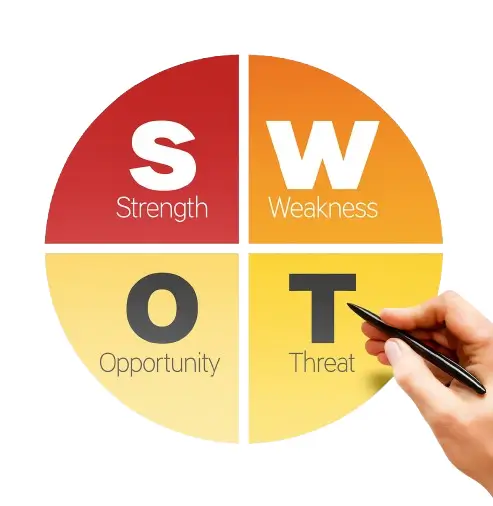
Orkla India IPO SWOT Analysis
With the company overview and IPO details in place, we can now move into the Orkla India IPO SWOT analysis. This segment offers a structured assessment of the firm’s internal strengths and weaknesses, alongside the external opportunities and threats that will influence its future trajectory.
Strengths: Orkla India IPO SWOT
- Heritage Brands with Deep Consumer Trust: Orkla India’s greatest strength lies in its iconic brands—MTR and Eastern, which command strong loyalty across households. MTR, founded in 1924, is synonymous with authentic South Indian flavors, while Eastern has built deep roots in Kerala’s spice trade. Together, they give Orkla India access to millions of repeat customers and a unique emotional connect—something few FMCG peers can replicate.
- Diversified Product Portfolio and Consistent Innovation: With over 400 products spanning spices, ready mixes, RTE/RTC meals, and vermicelli, the company caters to diverse meal occasions and consumer preferences. This wide product range ensures resilience against demand fluctuations in any single category. Its “3-Minute Breakfast” and convenience foods line also reflect a forward-looking innovation strategy focused on urban and millennial consumers.
- Extensive Manufacturing and Distribution Footprint: Orkla India’s nine in-house manufacturing facilities and 21 contract units enable flexible and scalable production. Its extensive network of 843 distributors, 1,800 sub-distributors, and nearly 6.9 lakh retail outlets ensures broad accessibility across 28 states and 5 union territories, with strong placement in both modern trade and e-commerce channels.
- Strong Parentage and Governance: As part of Orkla ASA, a EUR 6.3 billion Norwegian FMCG major, the company benefits from global expertise in R&D, supply chain management, and sustainability practices. This association enhances investor confidence, ensures adherence to strong corporate governance norms, and opens avenues for cross-market synergies.
- Growing Export Franchise: With exports contributing 20.6% of total revenue and presence in over 40 countries, Orkla India has established a strong international platform for growth. The company’s products are particularly successful among Indian diaspora markets in the UAE, the US, and Southeast Asia, positioning it as a trusted Indian-origin global food brand.
Weaknesses: Orkla India IPO SWOT
- Regional Concentration, but with Expanding Footprint: A significant portion of Orkla India’s revenue still stems from southern India, especially Karnataka and Kerala. While this indicates deep brand loyalty in the region, it also highlights concentration risk. However, the company has been proactively addressing this through aggressive distribution expansion into North and West India and leveraging e-commerce to reach newer demographics.
- Moderate Margin Volatility Due to Raw Material Prices: Spices and agri-inputs constitute a large part of production cost, making margins susceptible to commodity price movements. That said, Orkla India’s strong sourcing network, scale efficiency, and product mix optimization have helped it maintain double-digit margins even during inflationary cycles.
- Limited Global Brand Recall (Outside Indian Diaspora): While MTR and Eastern enjoy dominant recall among Indian-origin consumers abroad, awareness in non-diaspora markets remains relatively low. Orkla ASA’s marketing expertise and existing distribution in Europe and ASEAN markets present clear opportunities to bridge this gap over time.
- Dependence on Contract Manufacturing Partners: Although contract manufacturing supports flexibility and cost optimization, it introduces dependency risks. Orkla India mitigates this effectively through multi-location sourcing, strict quality control, and periodic audits, ensuring consistent product quality across facilities.
Opportunities: Orkla India IPO SWOT
- Expanding Packaged Food Market in India: India’s packaged and convenience food sector is expected to grow at a CAGR of 12–14% over the next five years, driven by rising disposable incomes, urbanization, and lifestyle changes. Orkla India—already a household name in South India—is well-positioned to capture this momentum nationwide through its trusted brands and strong retail network.
- Rising Demand for Authentic and Ready-to-Eat (RTE) Meals: Consumer preference is shifting toward authentic, ready-to-cook, and ready-to-eat meals that save time without compromising taste. Orkla’s 3-Minute Breakfast range, instant mixes, and spice blends align perfectly with this evolving demand. Its ability to merge traditional Indian recipes with modern convenience formats gives it a sustainable competitive edge.
- Export Growth and Global Expansion: With exports contributing over INR 486 crore (20.6% of FY25 revenue) and products reaching more than 40 countries, Orkla India is already a significant player in global Indian food exports. Continued growth in diaspora markets such as the US, Canada, and the Middle East, along with potential entry into new ASEAN and European regions through Orkla ASA’s network, offers multi-year expansion visibility.
- Product Innovation and Health-Focused Portfolio Expansion: The growing consumer focus on healthy, natural, and preservative-free products provides scope for portfolio innovation. The company’s emphasis on R&D and parent Orkla’s global expertise in food technology position it to introduce low-fat, millet-based, and fortified food lines—segments that enjoy premium consumer traction.
- Government Policies and “Make in India” Push: Supportive government policies promoting domestic manufacturing, food processing parks, and export incentives create a favorable environment. Orkla India’s scale, quality systems, and global credibility allow it to benefit directly from such initiatives.
Threats: Orkla India IPO SWOT
- Rising Competition, but a Defensible Niche: Orkla India operates in a highly competitive FMCG landscape, facing established players like ITC, Tata Consumer Products, and HUL. However, its regional brand dominance, authentic recipes, and loyal customer base offer strong differentiation. Moreover, its dual-brand strategy—MTR and Eastern—helps address both premium and mass segments effectively.
- Commodity Price and Inflationary Pressures: Inflation in spices, grains, and edible oils could impact production costs. Yet, Orkla India’s procurement efficiency, localized sourcing, and pricing discipline have historically cushioned volatility, as seen in FY25 when margins still improved despite cost escalations.
- Climate and Supply Chain Disruptions: Natural calamities or logistical disruptions can impact production and distribution. The company’s multi-location facilities, inventory planning, and strong vendor partnerships provide resilience against such uncertainties, ensuring business continuity.
Verdict
The Orkla India IPO enters the market backed by strong consumer brands, consistent profitability, and clear growth visibility. At the upper price band of INR 730, the valuation of about 37× FY25 earnings looks fair for a well-managed FMCG player supported by a global parent.
Analysts view Orkla India as a steady compounder—a business built on trust, efficiency, and scalability. With 20 % of revenue from exports, a 32 % ROCE, and rising national reach, it presents both stability and expansion potential. While regional dependence and input-cost pressures exist, they are offset by efficient operations and strong governance from Orkla ASA.
Conclusion
The Orkla India IPO marks the public debut of a heritage-rich food enterprise that seamlessly blends Indian authenticity with global excellence. Backed by strong fundamentals, healthy margins, and a diversified product portfolio, the company is well-positioned to benefit from India’s packaged food growth story. With its dual-brand strategy—MTR and Eastern—and robust distribution and export capabilities, Orkla India offers investors a chance to invest in a resilient, consumer-driven FMCG leader with clear growth visibility.
For more details related to IPO GMP, SEBI IPO Approval, and Live Subscription stay tuned to IPO Central.