

































Last Updated on December 8, 2025 by Rajat Bhati
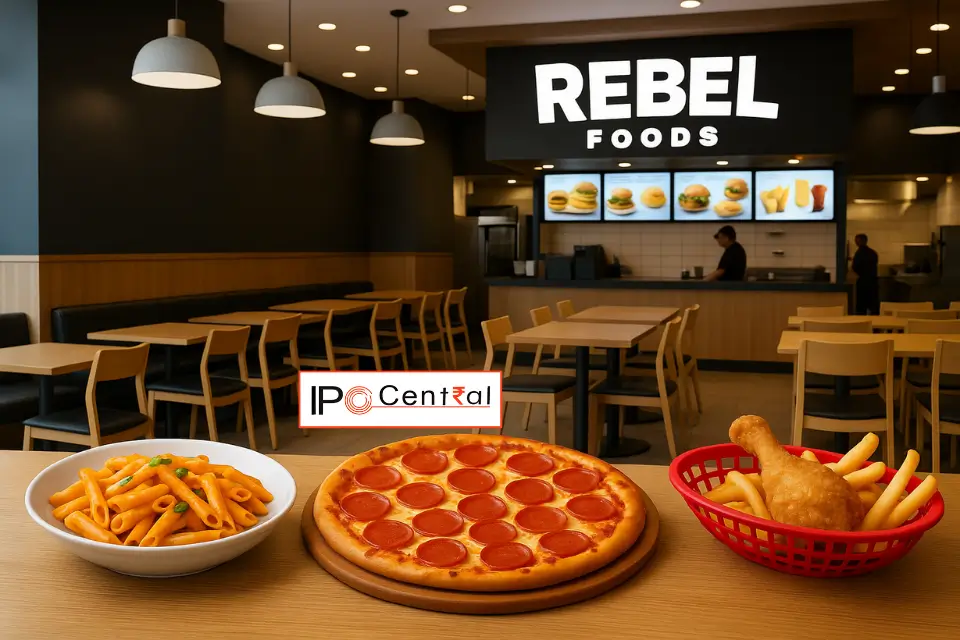
Rebel Foods, once the high-velocity poster child of India’s cloud-kitchen revolution, has entered FY25 on a markedly slower growth trajectory. The Pune-based company posted a 14% year-on-year rise in operating revenue to INR 1,617 crore for the fiscal year ending March 2025—its second consecutive year of muted expansion. However, a focused cost-optimisation effort helped the company narrow annual losses by nearly 12% to INR 336 crore.
The latest numbers reflect a business that is stabilising its unit economics but struggling to reignite growth momentum amid a sector-wide deceleration.
Revenue Growth Moderates, Reliance on Food Sales Deepens
Rebel Foods continues to derive the vast majority of its income from selling food products, driven by brands such as Faasos, Behrouz Biryani, The Biryani Life, Lunch Box, Over Story, and The Good Bowl. In FY25:
- Food product revenue: INR 1,565 crore (97% of operating revenue)
- Service income: INR 33 crore, up marginally from INR 31 crore
- Non-operating income: INR 41 crore
- Total income: INR 1,658 crore
A 14% top-line growth would ordinarily be respectable, but for Rebel Foods—a company that previously grew aggressively through multi-brand expansion and international forays—the figure signals a cooling of consumer traction and geographic scaling.
Expenses Rise More Slowly, Improving Unit Economics
One of the bright spots in the FY25 performance is cost discipline. Total expenses rose only 7% to INR 1,987 crore, roughly half the rate of revenue growth. Key expense lines moved as follows:
- Material costs: INR 678.5 crore, up 11%, accounting for 34% of total outgo
- Employee costs: INR 388 crore, down 2%
- Advertising and marketing: INR 153 crore, up 14%
- Brokerage and commissions: INR 243 crore, up 6%
The company’s focus on efficiency is also visible in unit economics: Rebel Foods spent INR 1.23 to earn every rupee of revenue, down from INR 1.31 in the previous year—its best improvement in recent years.
Its EBITDA margin improved to (10.39)%, while Return on Capital Employed (ROCE) stood at (35.93)%. Although still deeply negative, the directional shift indicates some operational tightening.
At the end of FY25, Rebel Foods held INR 56 crore in cash and bank balances, with current assets totalling INR 597 crore.
Funding, Investor Pressure, & Cloud Kitchen Conundrum
Rebel Foods has raised ~USD 803 million (~INR 7,234 crore) to date from institutional backers including Peak XV Partners, Coatue, QIA, and Lightbox. Despite its formidable funding base, reserves have begun to thin as the company shifts from an expansionary posture to one focused on survival and profitability.
Cloud-kitchens and QSR’s as a whole are experiencing a sharp slowdown in demand that’s putting a squeeze on margins. Not just the company itself but also listed peers like Barbeque Nation are seeing revenue quality and their profit margins being put under pressure. Domino’s is actually an exception here, with same-store sales doing alright and the benefit of being a big player bringing in a lot of scale-driven profit.
For Rebel Foods, the mix of stagnant revenue growth and losses that, while reduced, are still present is raising some very serious questions – ones that go to the very heart of its model. The industry is increasingly going to be expecting some serious restructuring, rationalisation of their kitchens, and a much tighter grip on their marketing and operational spending. And on top of that the company is running low on cash which makes investors expect a clearer plan on how they can break even.
Outlook
Rebel Foods’ FY25 numbers are painting a picture of a company that has managed to control costs. Rebel Foods’ multi-brand strategy, which was once seen as a major disruptor in the QSR space is now facing some pretty harsh realities – particularly around delivery, customer acquisition, and just how tough it is out there in the market.
Unless Rebel Foods can suddenly find a new way to get their hands on some new demand channels, sort out how to make the most of each kitchen, or somehow find a way to bring in more revenue with better margins, then we could be looking at a FY26 where they are just trying to keep costs down rather than expanding.
Right now, Rebel Foods is in a right old delicate phase: they’re stabilising but not really scaling yet, efficient but still making losses, and all this is happening with the deep pockets of investors keeping them afloat for now. But that patience is going to be wearing thin.
For more details related to IPO GMP, SEBI IPO Approval, and Live Subscription stay tuned to IPO Central.