



































In a groundbreaking step toward sustainable water purification, researchers at the IIT Guwahati have devised a natural and low-cost method to remove toxic lead from contaminated water using cyanobacteria — microorganisms capable of photosynthesis. This innovative approach promises an eco-friendly alternative to conventional chemical treatments and could help tackle one of the world’s most persistent environmental challenges.
Addressing a Global Health Threat
Lead contamination remains a severe environmental and public health hazard, affecting over 80 crore children worldwide, including an estimated 27.5 crore in India. The metal commonly enters water through industrial discharge, agricultural runoff, and ageing pipelines, and once present, can persist for decades. Its accumulation in living organisms leads to neurological, cardiovascular, kidney, and developmental disorders.
Conventional lead-removal technologies rely heavily on synthetic adsorbents and chemical treatments — methods that are expensive and prone to generating secondary pollutants. Recognizing the limitations of such systems, IIT Guwahati scientists turned to a natural bioremediation approach, harnessing the power of microorganisms to cleanse contaminated environments.
Harnessing Cyanobacteria for Purification
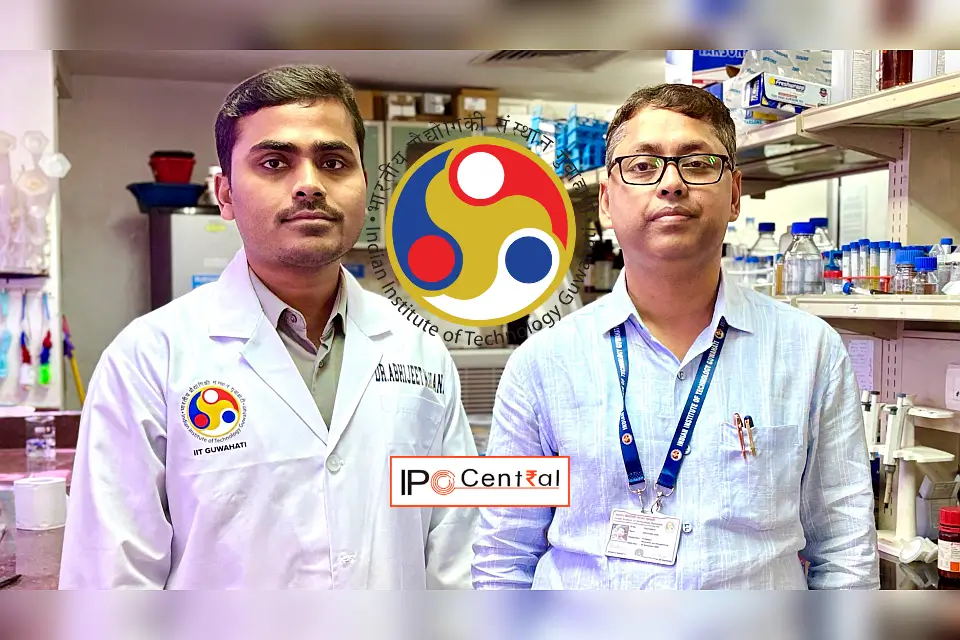
The study, recently published in the Journal of Hazardous Materials, was led by Prof. Debasish Das from the Department of Biosciences and Bioengineering, Dr. Abhijeet Mahana (Postdoctoral Fellow), and Prof. Tapas K. Mandal from the Department of Chemical Engineering.
The team employed a light-dependent, lead-binding cyanobacterial species — Phormidium corium NRMC-50 — and examined which components were most effective in capturing lead. Their investigations revealed that exopolysaccharides (EPS), a naturally occurring compound produced by the cyanobacteria, achieved an exceptional 92.5% lead removal efficiency from contaminated water.
“This method requires minimal energy input and can be scaled without sophisticated infrastructure,” explained Prof. Debasish Das. “Preliminary estimates suggest it can reduce treatment costs by 40–60% compared to conventional techniques, while maintaining comparable or superior efficiency. Its eco-friendly nature and affordability make it suitable for both industrial and municipal applications.”
A Multi-Pollutant Solution with Economic Potential
Beyond lead, the researchers demonstrated that cyanobacteria can absorb a wide range of pollutants, including pesticides, herbicides, hydrocarbons, synthetic dyes, and industrial chemicals. Moreover, the metals captured by these microorganisms can be recovered and repurposed into valuable materials such as biochar, bioplastics, and biofuels, presenting a circular economic advantage.
Because cyanobacteria are self-replicating, low-cost, and thrive using only sunlight, carbon dioxide, and minimal nutrients, the technology offers a sustainable and scalable path toward large-scale water purification — especially in regions where high-cost treatment systems are unaffordable.
Next Steps and Future Outlook
The research team now plans to scale the process from laboratory trials to a pilot-scale treatment system, testing the method in real wastewater environments. If successful, the innovation could form the basis of affordable and sustainable water treatment infrastructure, particularly beneficial for developing nations grappling with industrial pollution and limited clean-water access.
While the findings are currently at the laboratory stage, and further validation is underway, experts believe this work marks a significant leap in green biotechnology and demonstrates India’s growing contribution to environmental innovation.
Conclusion
IIT Guwahati’s discovery represents more than a scientific breakthrough — it embodies a vision for accessible, sustainable, and self-sufficient clean-water solutions. By combining microbiology with environmental engineering, the team has illuminated a path where nature itself becomes the architect of purification, reducing costs, waste, and ecological harm in the process.

As the world seeks urgent answers to pollution and climate challenges, this innovation from IIT Guwahati may well serve as a blueprint for the next generation of eco-technologies — proving that the smallest organisms can have the largest impact on planetary health.
For more details related to IPO GMP, SEBI IPO Approval, and Live Subscription, stay tuned to IPO Central.